ALi CABBAR
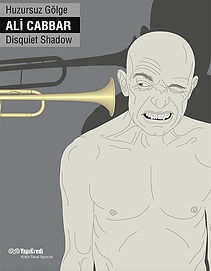
Disquiet Shadow, published by Yapı Kredi Yayınları in 2010, is an exhibition catalogue accompanying Ali Cabbar’s solo show at the Yapı Kredi Kazım Taşkent Art Gallery in Istanbul. Bringing together the artist’s recent works across different media, the book traces a body of work shaped by fragmentation, unease, and dark humor. It draws conceptual inspiration from Fernando Pessoa’s The Book of Disquiet, using its atmosphere of introspection and instability as a point of departure for Cabbar’s visual language.
The publication documents the exhibition while also extending its conceptual framework beyond the gallery space. It includes a curatorial essay by Başak Şenova, an in-depth interview with the artist, and a critical text by Roger Pierre Turine, offering multiple perspectives on the work.

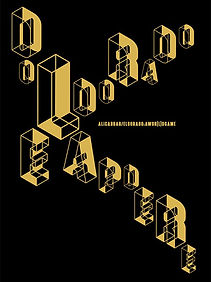
Eldorado: A Wor{l}d Game is an exhibition catalogue accompanying Ali Cabbar’s solo show at the Museum of Fine Arts (Galerija umjetnina) in Split (2019). Bringing together a research-based body of work developed since 2016, the book explores the role of art and artists in processes of urban gentrification, drawing from the transformation of Istanbul’s Dolapdere district. Edited by Başak Şenova, it includes texts by Branko Franceschi, Şenova, and Sinan Logie—an architect and artist—alongside documentation of the exhibition, presenting Cabbar’s critical and multidisciplinary approach to displacement, capital, and cultural change.

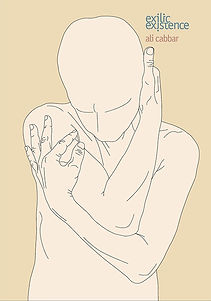
Exilic Existence is an artist’s book designed by Ali Cabbar, developed in parallel with his art project and exhibition of the same name. The book consists primarily of the artist’s drawings, accompanied by brief, statement-like texts that respond to the situations he inhabits. It engages with themes of identity, belonging, and political uncertainty, presenting Cabbar’s ongoing inquiry into the emotional and spatial dimensions of exile in contemporary society.


Shores – Artist Books is a project presented at Open Club Gallery in Moscow 2019), curated by Mikhail Pogarsky and İpek Duben. For this exhibition, Ali Cabbar created a handmade, numbered artist’s book that reflects on his childhood perceptions of Russia while growing up in Turkey. Through a personal and memory-based approach, the publication explores how distant geographies are imagined, constructed, and reinterpreted over time, translating early impressions into a visual narrative.

Ali Cabbar's urban-space installation I Shot the Last Rhino is a requiem for wildlife lost to human destruction. This exhibition magazine reflects on the work’s exploration of extinction, memory, and human responsibility.
Read the magazine here

Placebo Effect exhibition catalogue accompanied Ali Cabbar’s solo show at Operation Room Gallery in Istanbul (2015). Bringing together works across pop and street art, the book explores the idea of the “placebo effect” as a social and cultural phenomenon, reflecting on politics, contemporary art, and everyday life through irony and symbolic imagery. It includes documentation of the exhibition alongside a critical text by art critic Evrim Altuğ, presenting Cabbar’s multidisciplinary practice and its engagement with polarization and perception in contemporary society.

This brochure was designed for Ali Cabbar's Red Passage exhibition at Yapı Kredi Cultural Center in Istanbul. Curated by Başak Şenova, the exhibition explores contemporary systems of power, belief, prohibition, and social control through faceless figures and symbolic icons. Using a strong graphic language, Cabbar refleced on the relationship between life and death, inviting viewers into a corridor-like procession where they become both witnesses and participants.
A pamphlet designed for Ugly, Ali Cabbar’s exhibition at DEPO Istanbul. The exhibition examines the “ugly” face of Turkish democracy, focusing on the visual language of political parties and election campaigns. By reproducing political party logos and posters from different periods, Cabbar links their clumsy designs with the country’s fragile and awkward democracy. Curator Beral Madra wrote the accompanying text for the pamphlet, titled The Visual Language of Political Manipulation.


